



Stay informed with news, updates, and best practices on the ParentSquare blog.
Explore
Core Platform

Solutions for every role in your school community
See how we solve real challenges facing schools
Insights and ideas that add value to districts
A centralized hub for expert help and guidance

A practical guide for coaches and athletic directors
Behind every great athletics program isn’t just strategy and skill: it’s strong communication. Coaches need to keep athletes and families connected, athletic directors need visibility across multiple teams, and district leaders need confidence that communication is happening transparently, inclusively, and consistently.
But coaches are some of the busiest, most overextended people in education. Many juggle teaching, practices, and games, all while managing team logistics and family communication. In those moments, it’s tempting to rely on quick fixes like group texts, third-party apps, or social media messages.
The problem? Fragmented communication creates inequity and unnecessary risk. Families miss important updates, administrators lose oversight, and coaches are left without the compliance protections they need, placing unnecessary strain on everyone.

Coaches and athletic directors
School and district leaders
Athletics programs deserve the same effective communication as the rest of the district, from everyday team updates to promoting big games in the community. By consolidating athletics into the same platform as classroom and district communications, schools can reduce app fatigue for families and give coaches one less system to juggle.
Together, these strategies provide practical approaches you can use with any tool — with special tips for districts using ParentSquare to unify and simplify athletics communications across their community.
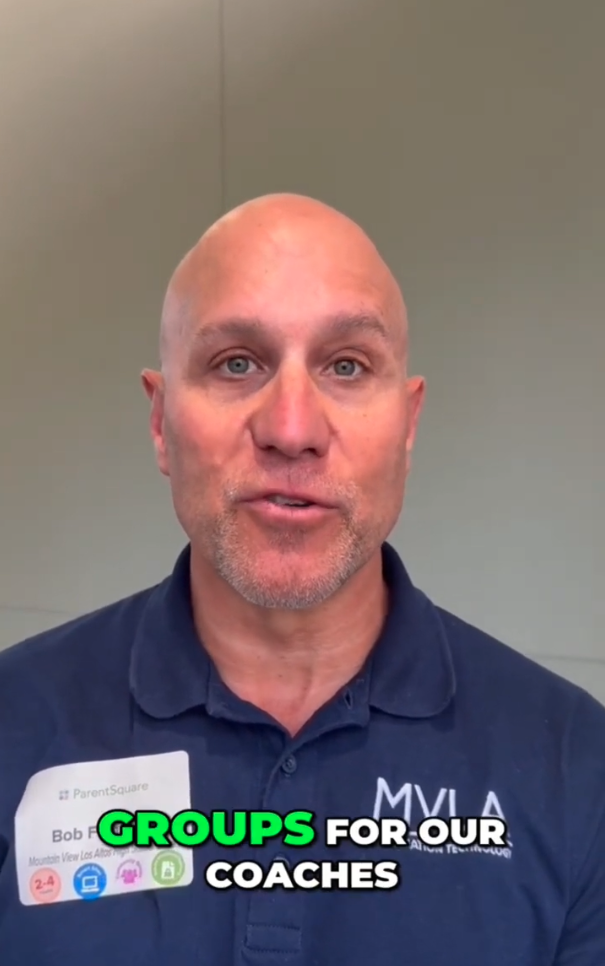
“We started using ParentSquare groups for our coaches so all the communication is e-discoverable and comes through the same platform and our coaches are aware how to use [it].”
Getting coaches and activity leaders onto a district-approved platform is often the last hurdle in unifying school communication. Many coaches are part time, have stipend roles, or are volunteers who are used to tools like TeamSnap, Hudl, SportsYou, BAND, or group texts. These may be simple to adopt, but they often create bigger issues over time, including:
These challenges aren’t just inconveniences; they directly impact equity, trust, and compliance. Families deserve a single, reliable source of truth, while coaches deserve tools that save them time. And districts deserve the confidence that communication is compliant, accessible, and archived.
To meet these needs, coaches should have access to a simple, transparent way to connect with families. Meanwhile, districts should be able to house their athletics communications in the same platform used by classrooms and schools to maintain oversight and accountability.
As Lou DeVincentis, Director of Communications at Orange City School District, explained:
“From a privacy and security standpoint, ParentSquare protects our kids and our coaches because everything that’s communicated is backed up. As a district admin, I can access all of those communications across the entire platform.”
Level the playing field
Coaches save time and reduce stress with ParentSquare: one post reaches every family in their preferred language and format, while districts get the oversight they need.
Just as no coach wins a championship alone, no one person can manage athletics communications alone. It takes a team.
The athletic director provides department-wide leadership and ensures consistency. Coaches handle team-level communication with students and families. Administrative assistants support logistics such as rosters, travel, and scheduling. Principals and district leaders provide oversight and ensure communication aligns with broader school goals. Parents, volunteers, and booster club leaders often play a role in promoting events and community engagement.
Athletic directors in particular set the tone for program-wide communication. As Kevin Yeckley, Athletic
Director at Lakota Local Schools, shared:
“Before ParentSquare, it was difficult for coaches to contact players and families on different platforms. As a part of state compliance, we have to keep records of all conversations, which was difficult on multiple apps, and there was a lack of visibility for the district. Coaches now have peace of mind that they’re using a school-approved platform that tracks all communications.”
When each role is clear and supported, communication becomes more reliable. Families know where to look for updates, coaches feel less pressure to “do it all,” administrators gain visibility and peace of mind, and everyone works together to create a system that feels seamless, not scattered.
Successful programs clarify who does what. These are some of the common responsibilities that members of your athletics communications team may take on:
Pro tip: Keep your athletic communications team small and focused. A handful of clearly defined roles is more effective than a large group without clarity.
When these groups work in harmony, families experience athletics communications as reliable, professional, and inclusive instead of scattered and confusing.
Give the right access to the right people
Role-based permissions give each group the access they need, while allowing administrators to maintain oversight across all communication.
As with academic communication, students and families benefit most when athletics communication is clear and engaging. Here are practices that schools and districts across the country have found most effective.
Families trust communication they can count on. Many coaches send a weekly Sunday evening update outlining the week’s practices, games, and expectations. Others use daily reminders. The format matters less than the routine; when families know when to expect updates, they feel prepared and supported.
Every update should answer the basics: Who? What? Where? When? A quick message with complete details reduces stress for families and saves coaches from fielding repeated questions.
Not all families access information the same way. Messages should be available in multiple languages and formats such as text, email, app, or voice messaging, so no family misses out on information or feels left out.
Deliver the right message the right way
With automatic translation in 190+ languages and delivery across multiple channels, families receive information in the way that works best for them.
Communication works best when it goes both ways. Coaches and athletic directors should provide a trusted, compliant way for families to ask questions or share concerns. Two-way channels reduce misunderstandings and strengthen relationships.
For football coach Rob Senor at Orange City Schools, this daily practice has become essential:
“Communication is such a vital part of any successful football program. During the season, I use ParentSquare almost daily to post practice messages and updates for kids and families. I also send direct messages to athletes— sometimes individuals, sometimes small groups. It’s been a game changer.”
Pro tip: Coaches often need to connect quickly while on the go. Using ParentSquare Virtual Phone allows them to call parents directly from the field or court without exposing their personal numbers and from a local area code so families pick up.
From volunteer sign-ups to headcounts for team dinners, coaches juggle details that keep families engaged and programs organized. Simple tools for polls, RSVPs, and sign-ups reduce paperwork and confusion while making it easier for parents to pitch in.
Simplify sports payments to collect funds
With ParentSquare Pay, coaches can collect fees for uniforms, spirit wear, and fundraisers with just a few clicks, right in the same place families already receive team updates.
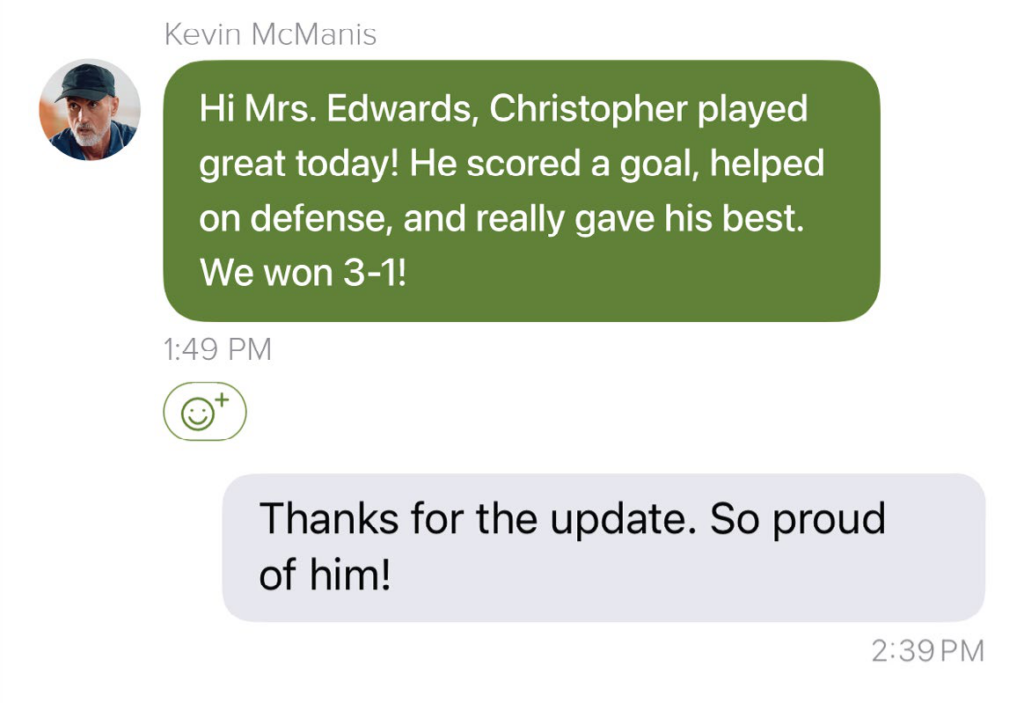
Recognizing team achievements, celebrating milestones, and highlighting student growth — both in team updates and individual outreach — helps build morale and foster community pride.
Photos, highlight reels, or even quick behind-the-scenes snapshots help families feel connected and give athletes a sense of pride. Visuals also serve as powerful storytelling tools for the broader community.
Bring your sports season to life
With built-in tools for posting photos, videos, and files, coaches can engage families while keeping all communication archived and professional.
For many districts, athletics are a cornerstone of school culture and community pride. Effective communication strengthens connections between schools and families, reinforcing athletics as a unifying force in the community.
Athletic directors and coaches can expand this impact by:
Use your website to show off your athletics program
Publish schedules, team highlights, and booster updates directly to your school’s website using ParentSquare Smart Sites to make it easy for your community to find and follow your athletics program.
Emily Worrell, Director of Communications and Marketing at Wawasee Community School Corporation,
has seen this firsthand.
“This year, we’ve focused on strengthening connections between parents and students through ParentSquare—especially in athletics—and the results have been incredible! Our coaches now use Virtual Phone within the platform, allowing them to communicate quickly and safely from the field or court. It’s streamlined, secure, and keeps our families in the loop like never before.”
While this guide focuses on athletics, the same best practices apply across extracurriculars and districtwide communication.
Braden Wolf, Director of Bands at Moore Public Schools, shared:
“Switching to ParentSquare has saved us so much time contacting parents. Students and parents are automatically added to the app, and they are associated with each other in every respect, making it easier to contact them.”
These stories reinforce the bigger picture. Strong communication doesn’t just keep teams organized; it connects entire communities.
Great coaches know this truth: communication builds trust, and trust builds teams. Athletics programs thrive when families feel informed, athletes feel supported, and schools feel connected.
District leaders, principals, and athletic directors have the power to give their staff the tools they need to succeed. By embracing communication best practices and unifying them with ParentSquare, you can reduce stress for coaches, protect families, and build stronger, more connected school communities this sports season and into the future.
Districts across the country are simplifying athletics communications with ParentSquare — the same platform already trusted for classrooms, schools, and districts. For coaches and athletic directors, that means juggling fewer apps, and more time to focus on their athletes.
ParentSquare is the leading family engagement infrastructure helping K-12 districts nationwide reach every family with an award-winning, all-in-one communication platform. Reaching over 22 million students nationwide, ParentSquare helps districts consolidate disconnected tools and outdated communication systems with personalized messaging, websites, forms, payments, and more — in one easy-to-use platform. With powerful features for achieving 100% contactability, two-way translation into 190+ languages, and purpose-built AI enhancements, ParentSquare empowers districts to invite every family to be involved in their student’s education, no matter their home language or the device they use.
Recognized for growth and innovation by Inc. 5000, GSV 150, and more, ParentSquare was founded in 2011 in Santa Barbara, California. Learn more at parentsquare.com.